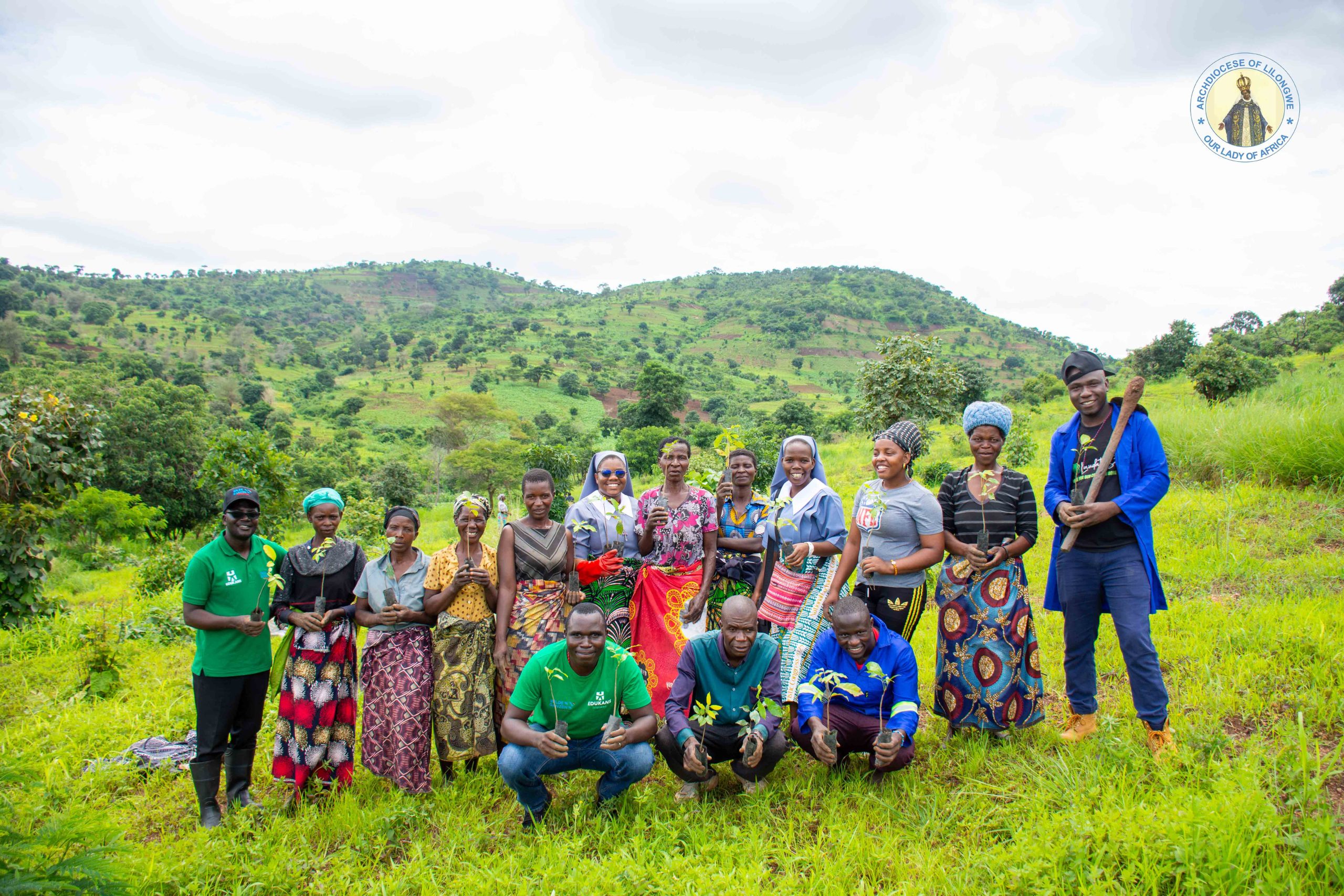
On Saturday, January 17, 2026, the Catholic Archdiocese of Lilongwe intensified its commitment to environmental stewardship by launching the second phase of its tree-planting initiative at St. Benedict the Black – Nanthomba Parish in Dowa District.
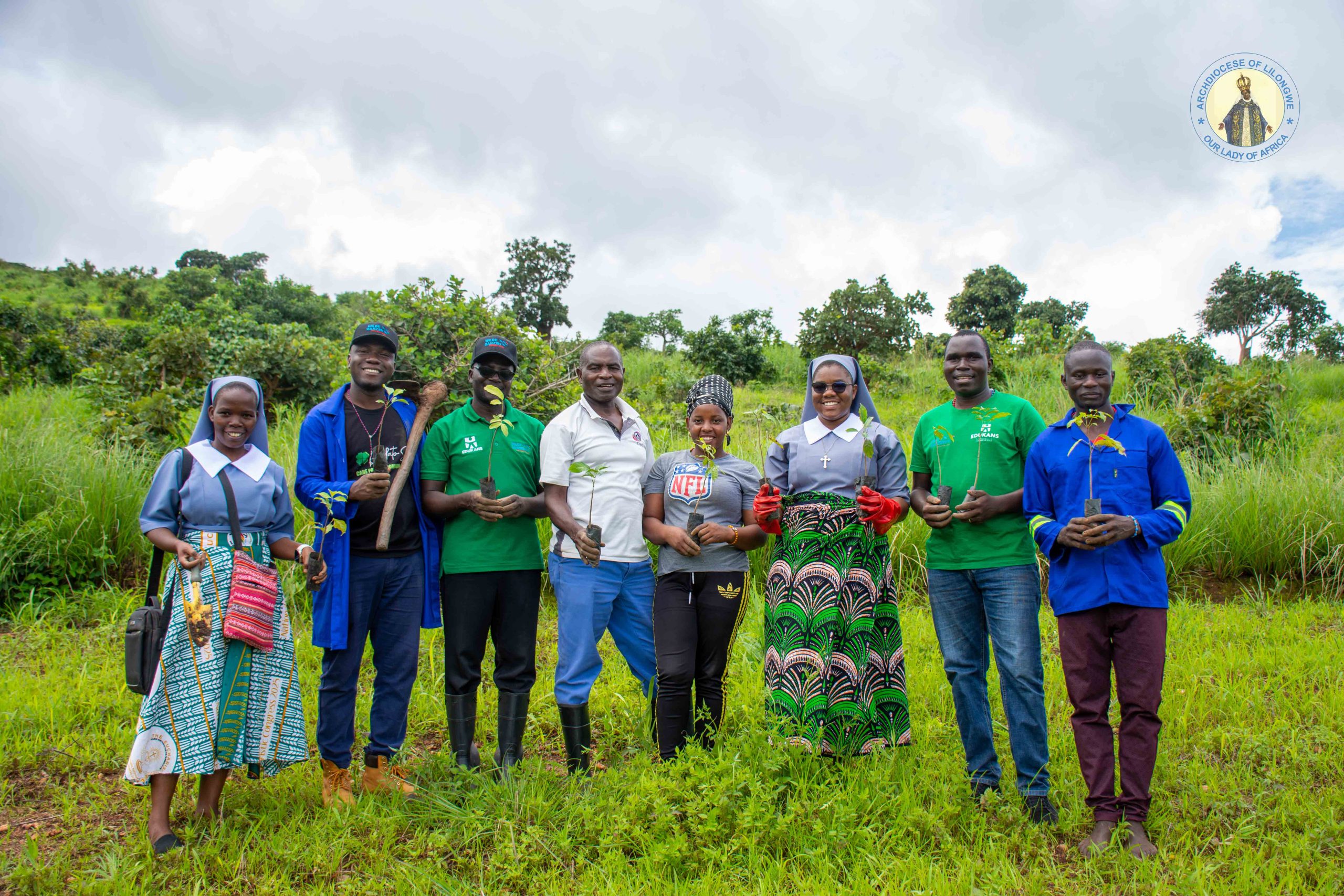
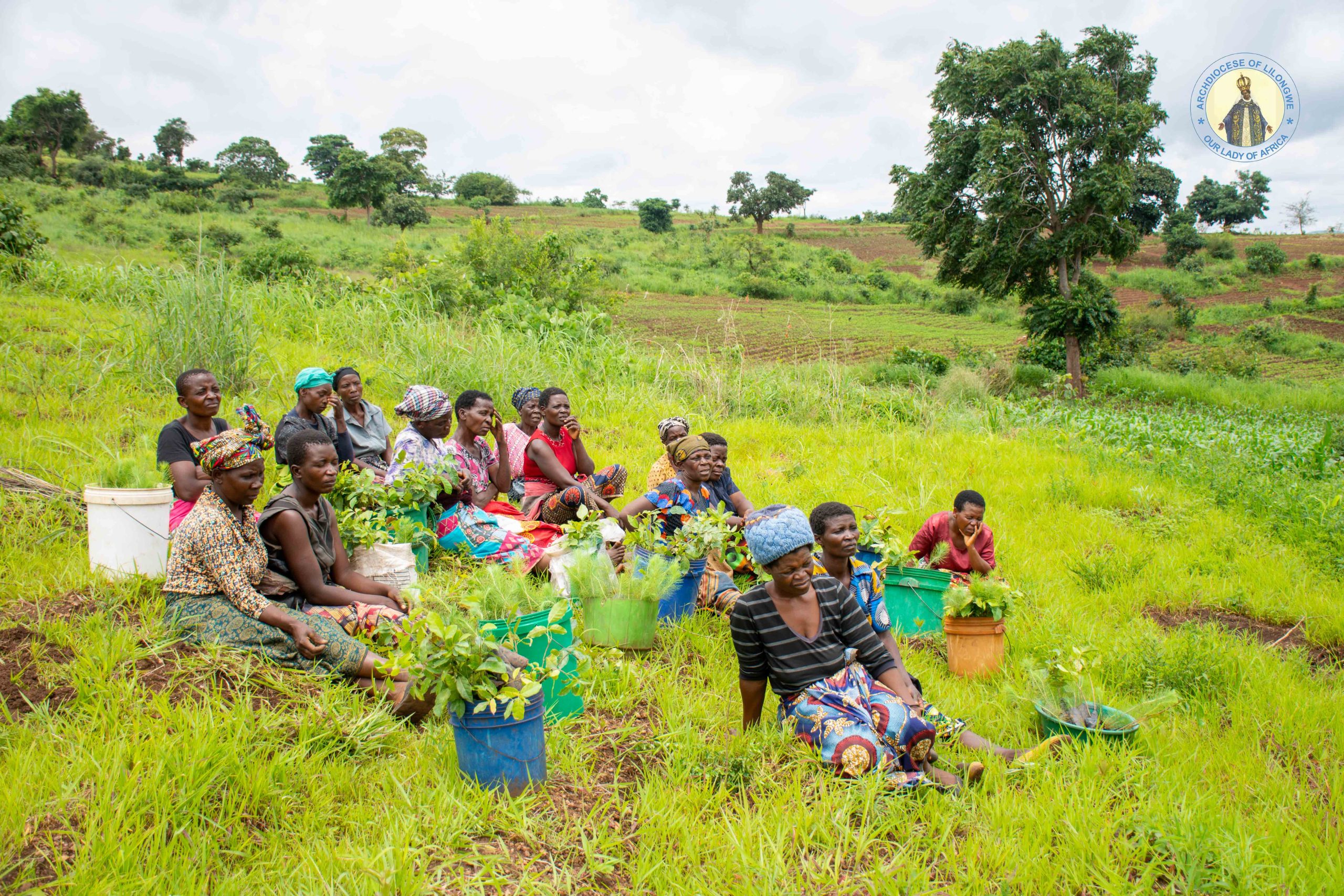
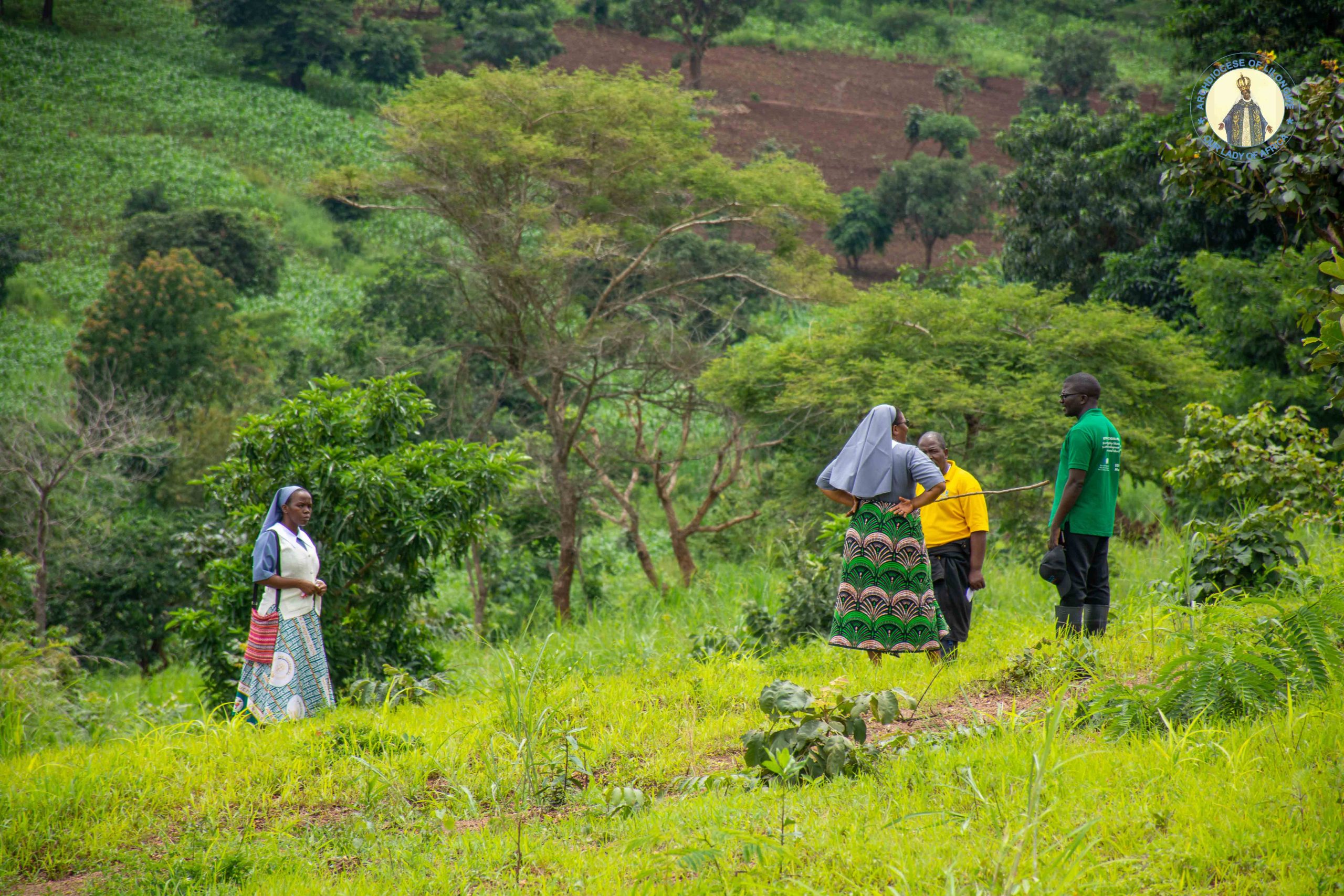
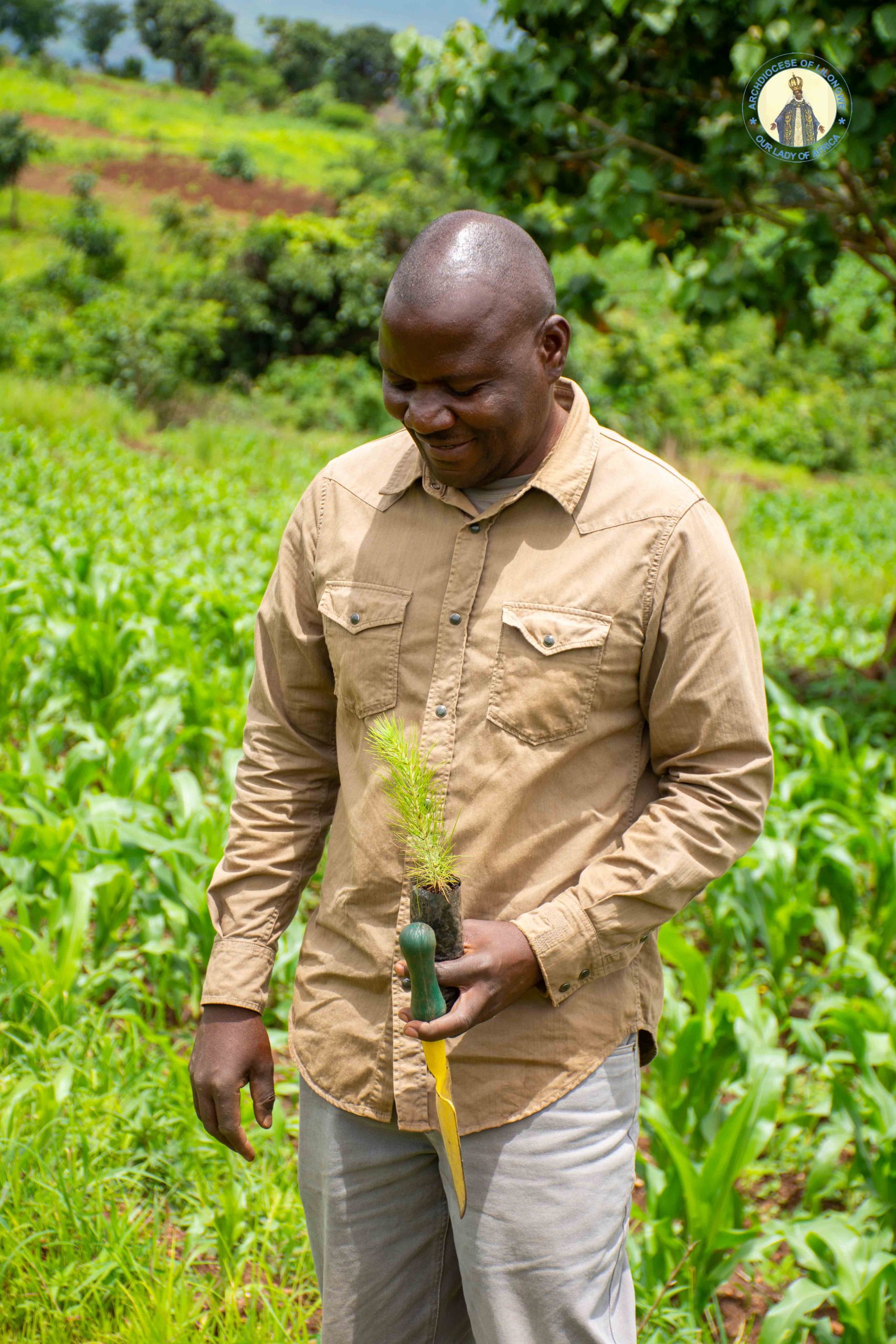
The Archdiocesan Administration representatives showcase the trees before planting at Nanthomba Parish
The event aligns with a massive national conservation drive, as Malawi aims to plant 41 million trees in 2026, with Dowa District alone targeting 2.5 million trees this season.
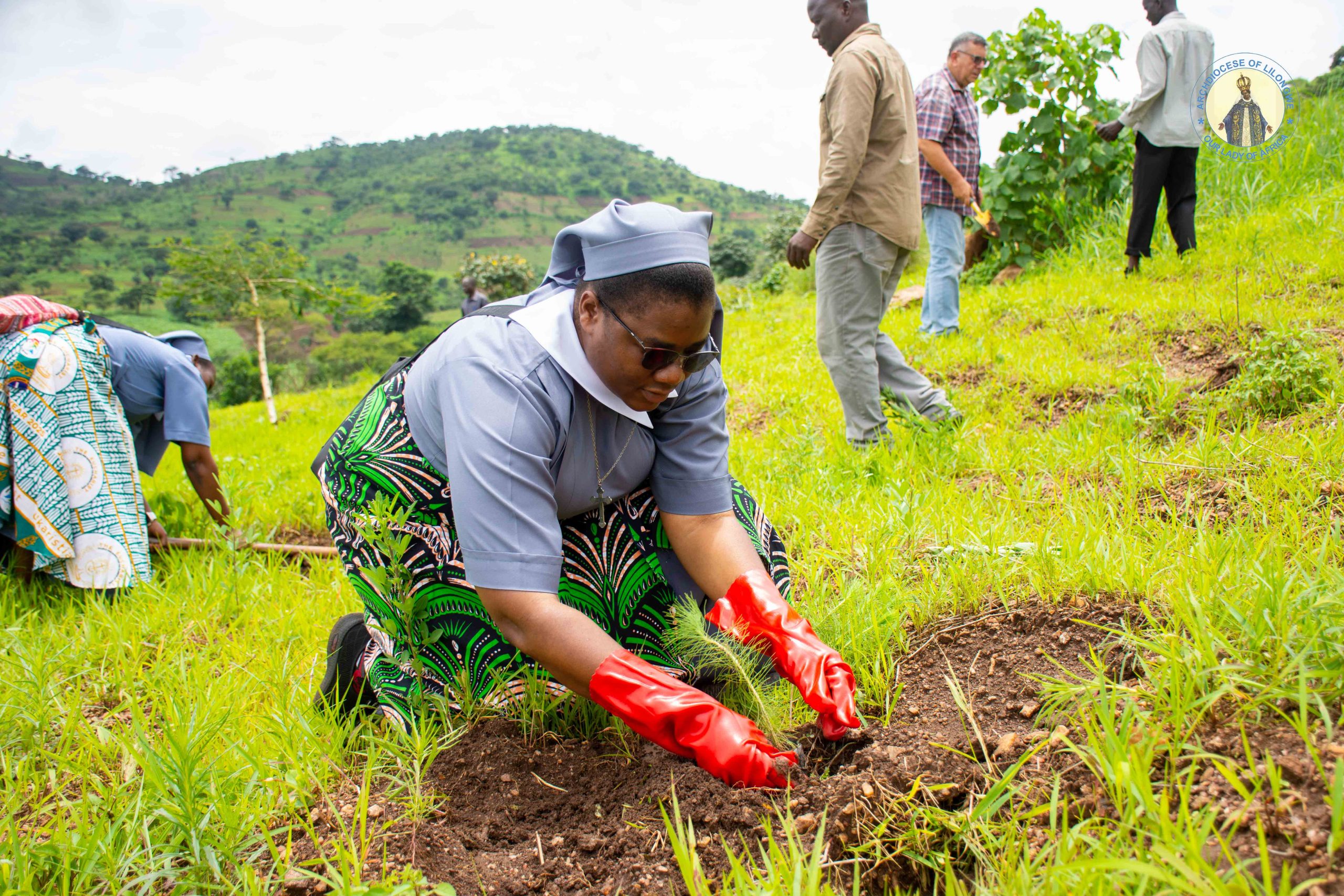
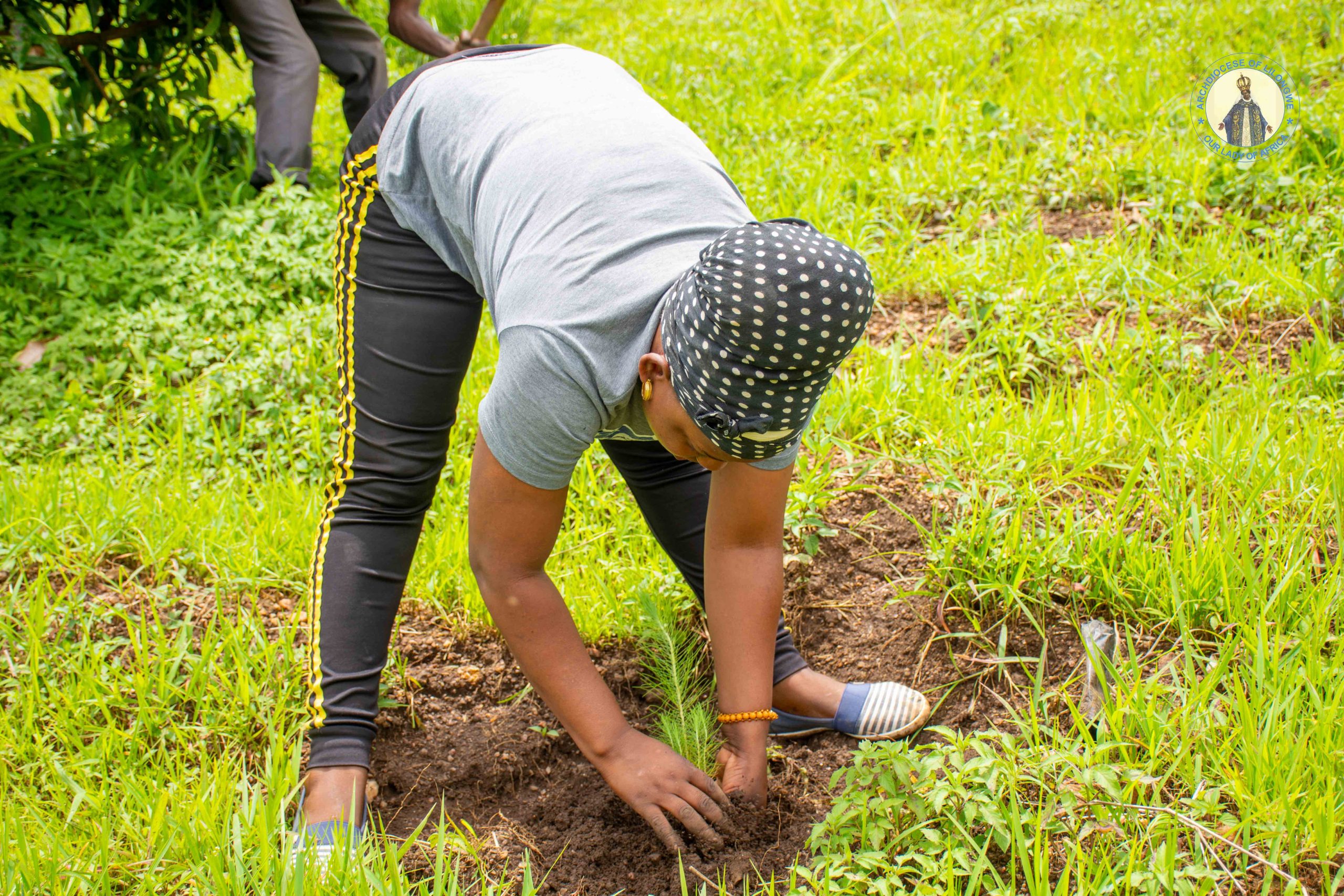
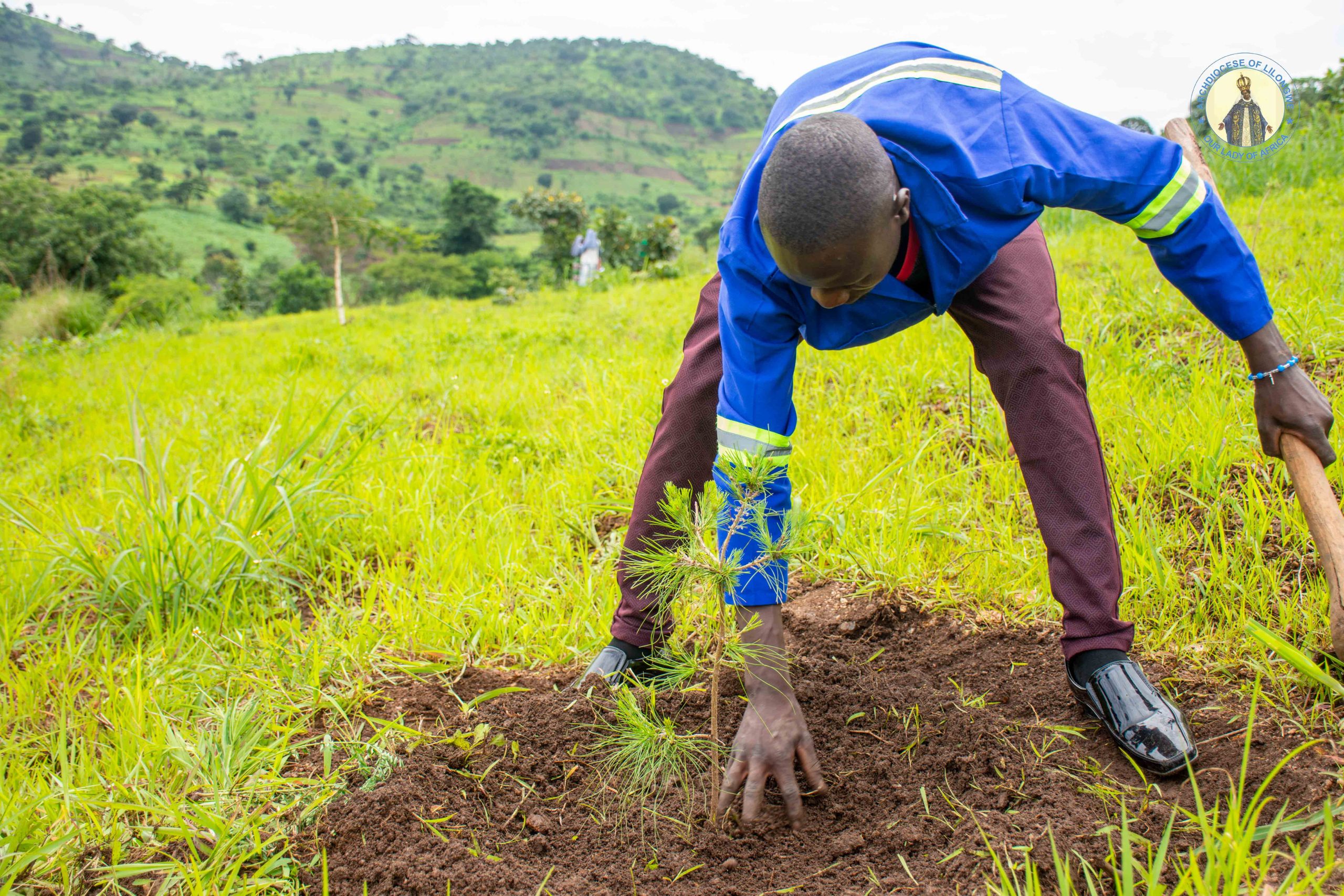
Leading the exercise, Sr. Dorice Anastazia Tembo, the Financial Administrator of the Archdiocese of Lilongwe, emphasized that environmental care is directly linked to the church’s economic stability.
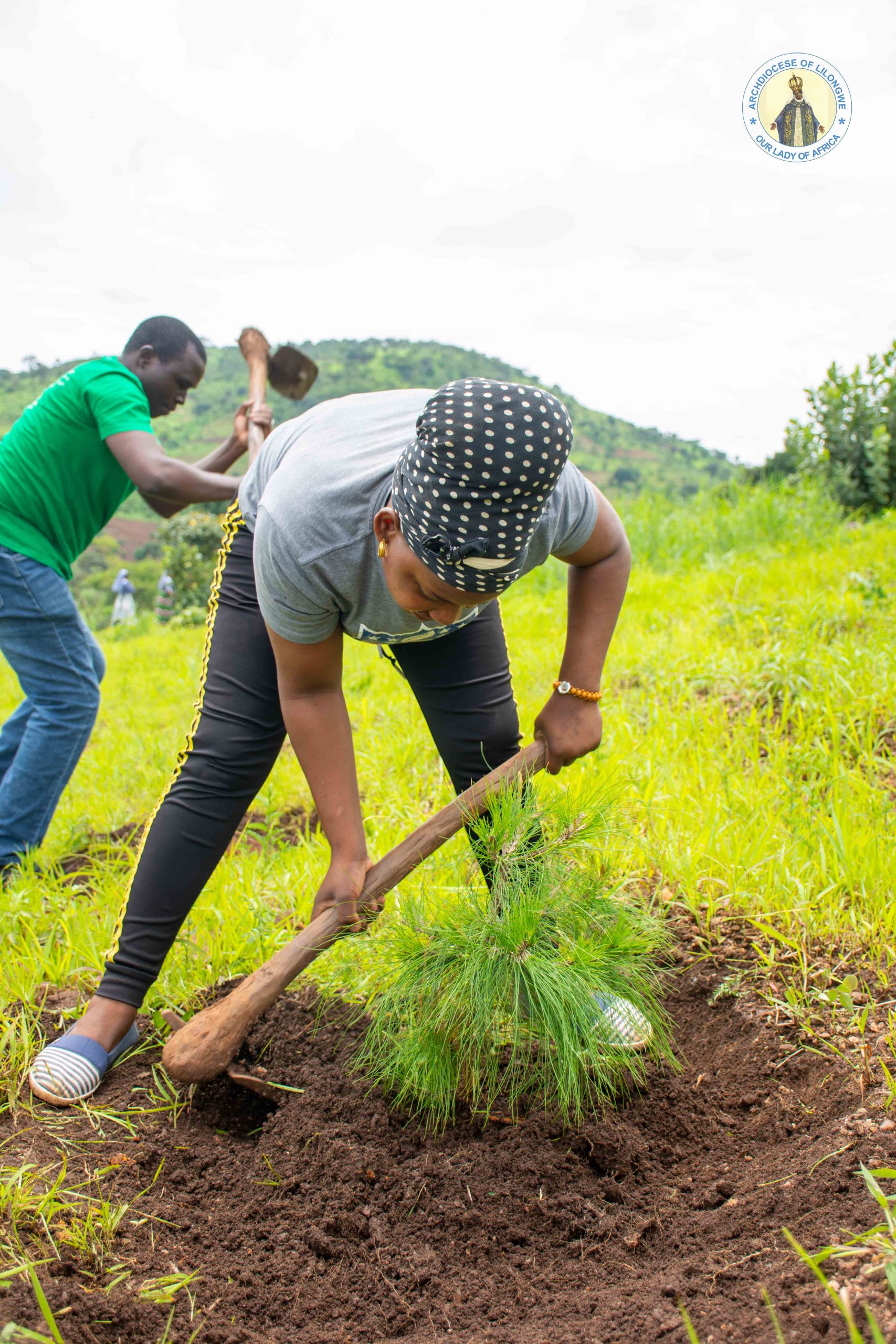
Sr. Dorice Tembo, Financial Administrator of the Archdiocese of Lilongwe, plants a tree at Nanthomba Parish, highlighting how environmental conservation supports the financial stability of rural families
She noted that because the archdiocese relies on contributions from parishioners—most of whom are rural farmers—the health of the environment dictates the financial health of the church.
“We rely on our parishes for financial support, and many are in rural areas where farming is the primary livelihood,” Sr. Dorice explained. “Good harvests require fertile land and reliable rainfall, which are only possible if we conserve our forests. By planting trees, we are ensuring that our people can meet their targets and continue to support the mission of the Archdiocese.”
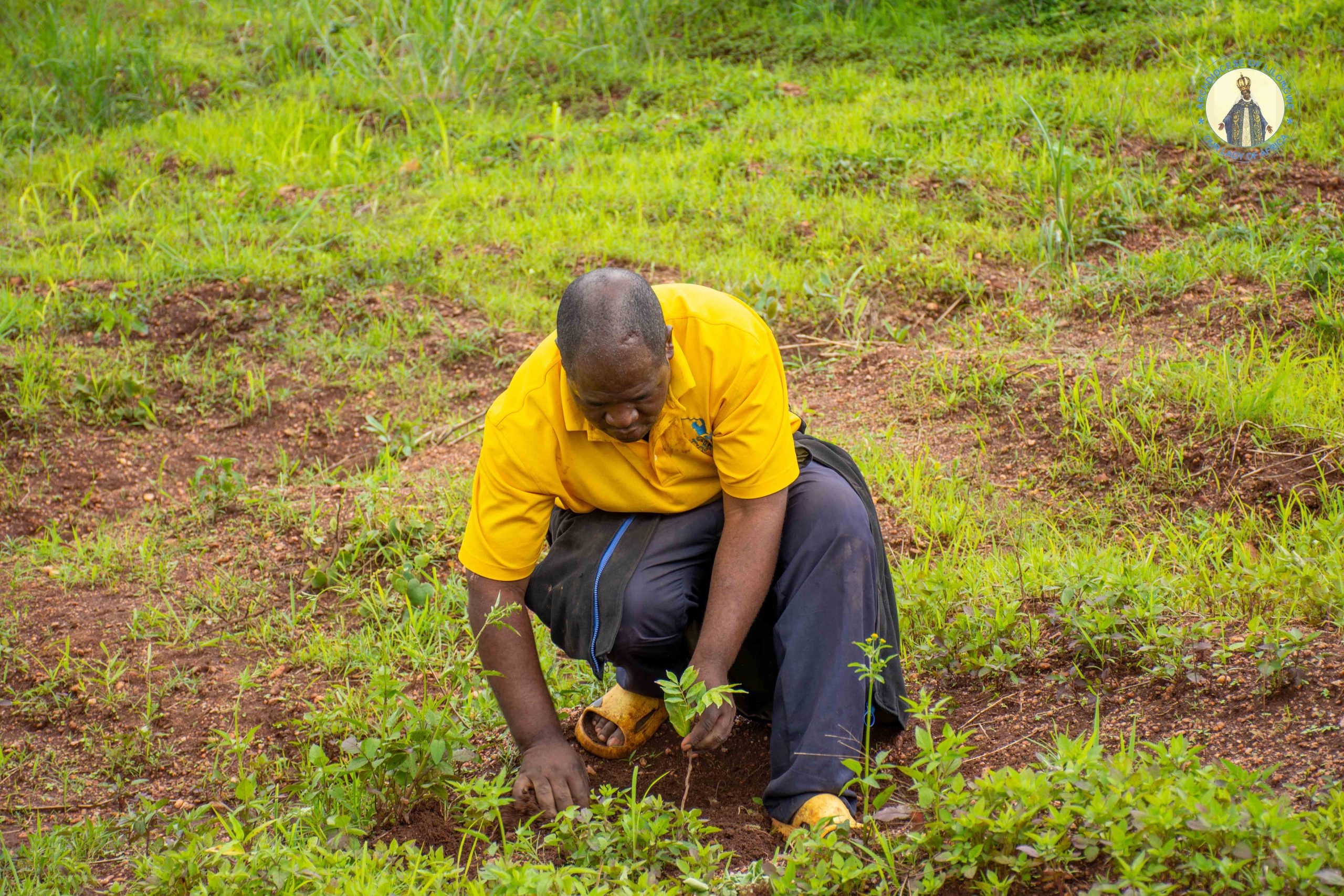
The Parish Priest of Nanthomba, Fr. Francis Sebastian, thanked the Archdiocese for its leadership and highlighted the local community’s enthusiasm. Reflecting on the Pope’s encyclical on the environment, Laudato Si’, Fr. Sebastian expressed his personal passion for reforestation.
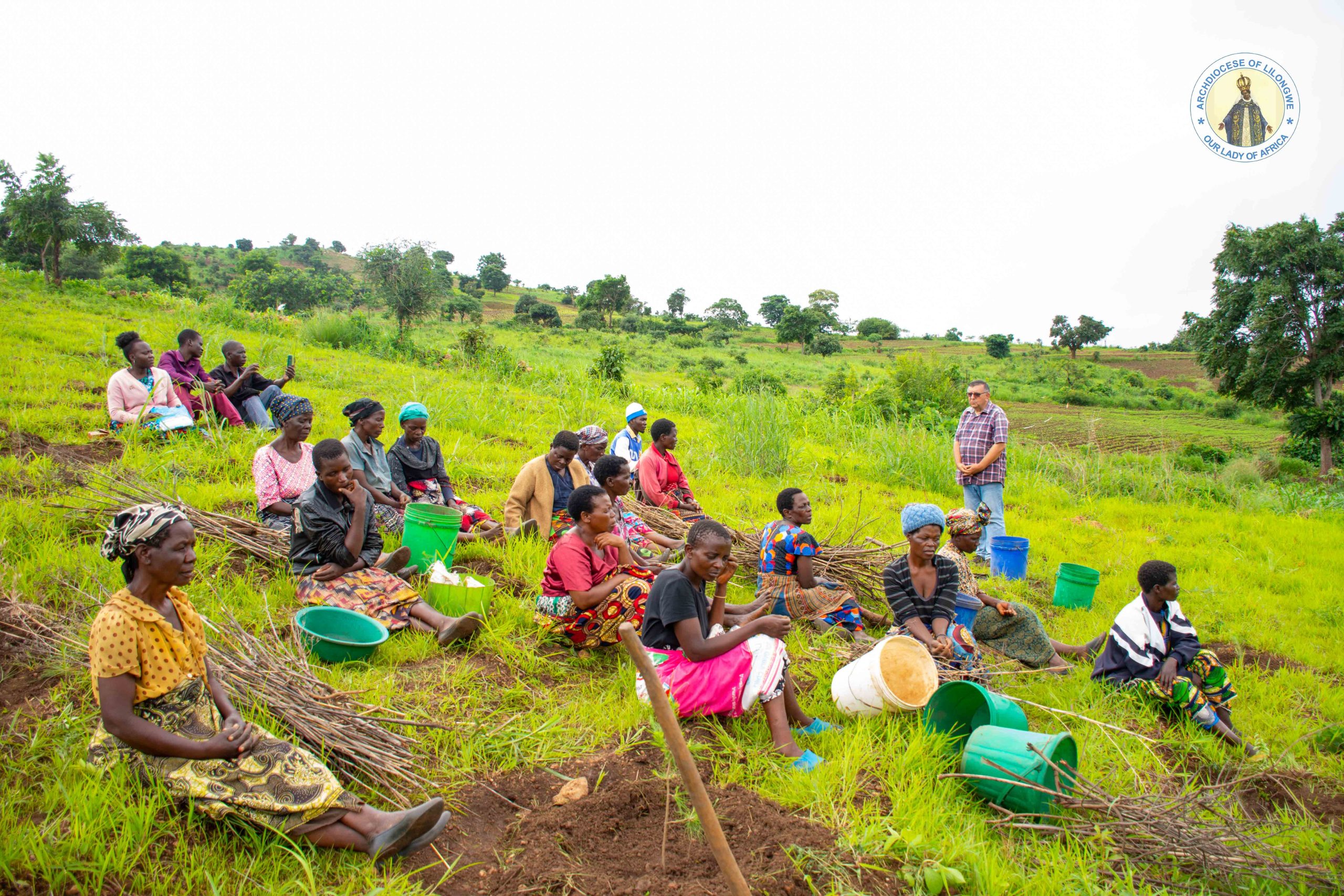
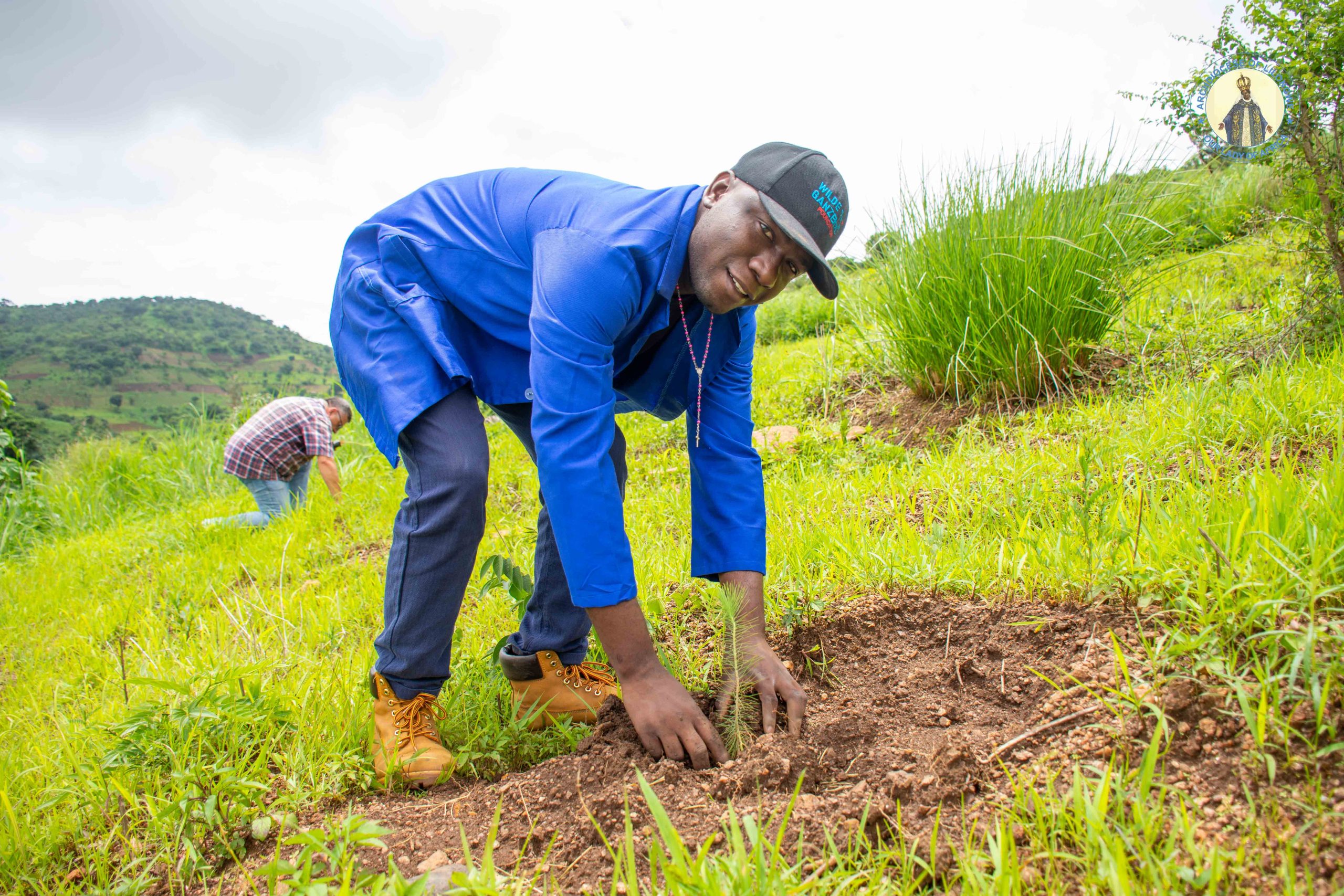
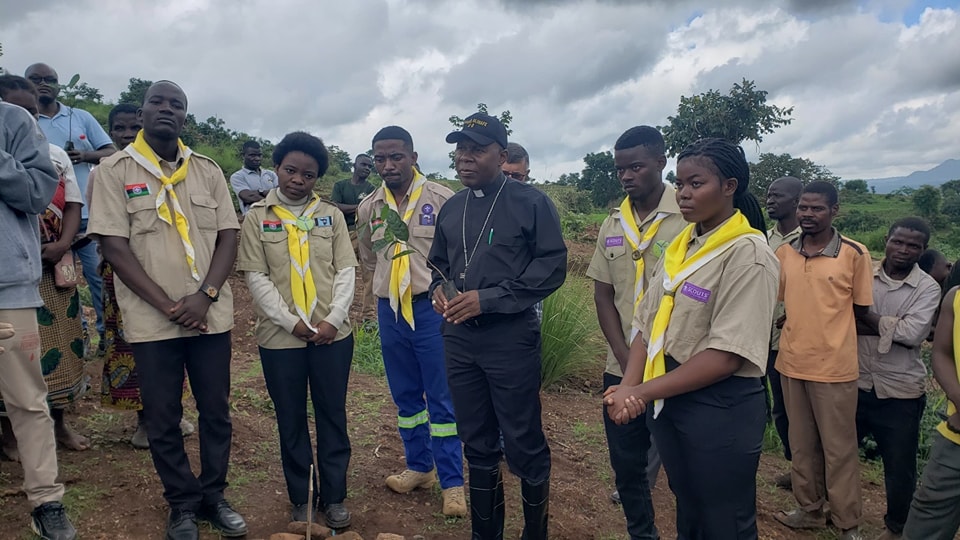
Parish Priest Fr. Francis Sebastian joins his congregation in the fields, fulfilling the call of Laudato Si’ to care for our common home
“It pains me to see empty spaces where there were once thick forests, cut down for cultivation,” Fr. Sebastian said. “Our Christians have worked hard to prepare this land. We are encouraging them to plant trees not just here, but around their own homes to ensure they have sustainable sources of firewood and construction materials for the future.”
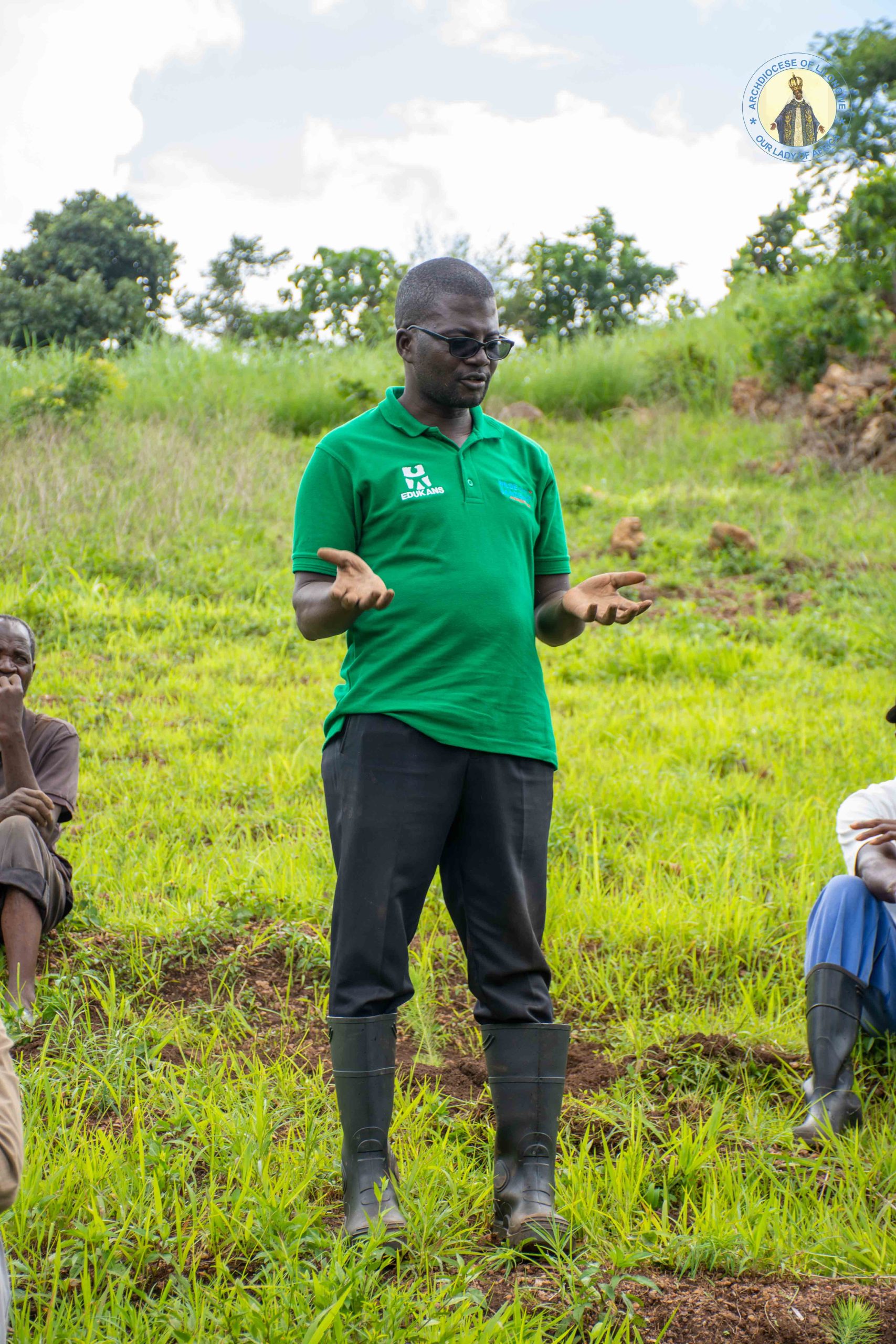
Lloyd Chishambula from the Eco Schools Program at the Archdiocese of Lilongwe, who helped facilitate the event, stated that the goal is to create “parish models” that other communities can emulate. The program encourages individuals to plant durable species like Mibawa (Mahogany) and Pine.
Lloyd Chishambula discusses the importance of planting Mibawa and Pine trees for future community development
“We want people to be independent,” Chishambula said. “By planting trees now, they are creating their own resources for future construction, reversing the environmental crisis one parish at a time.”
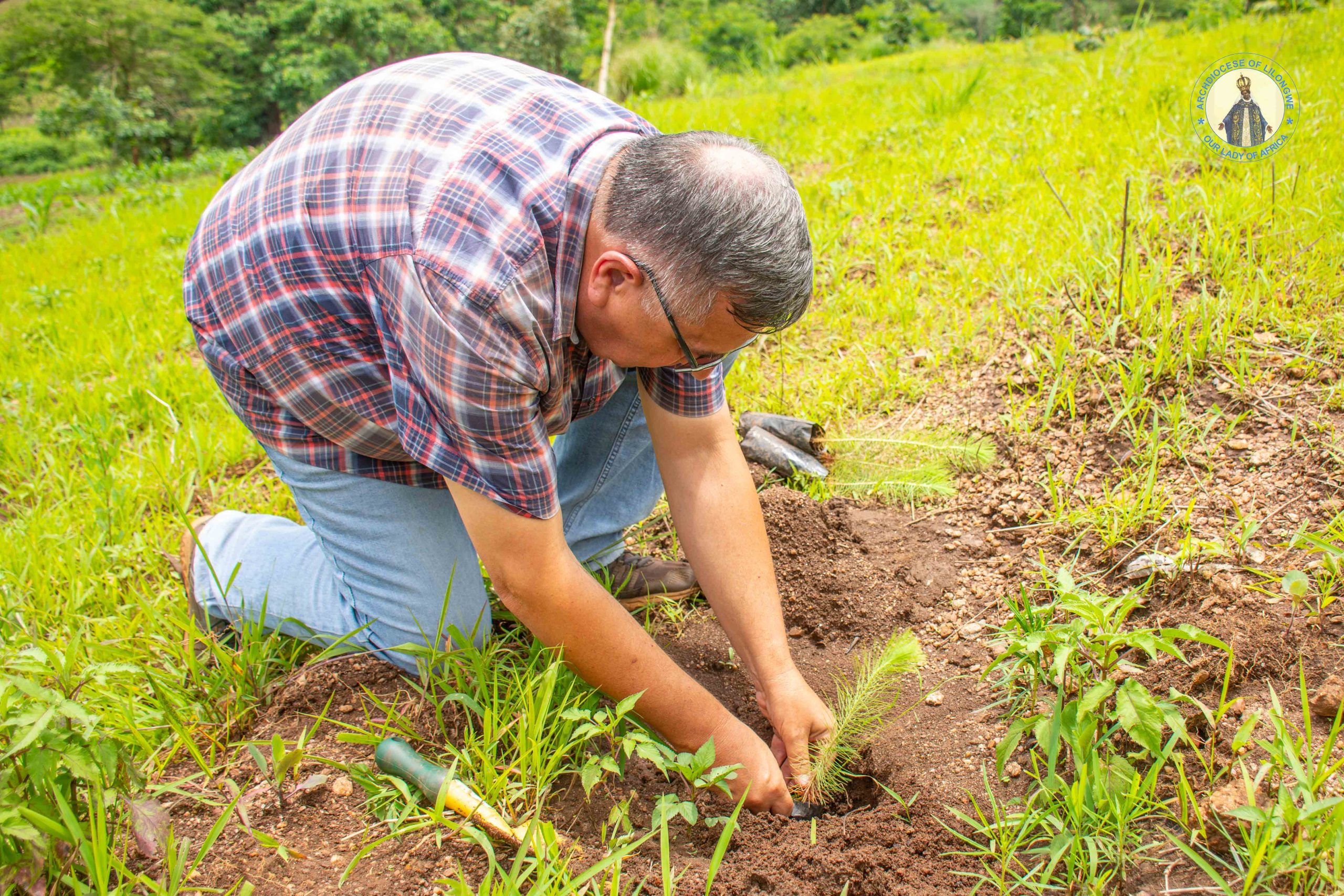
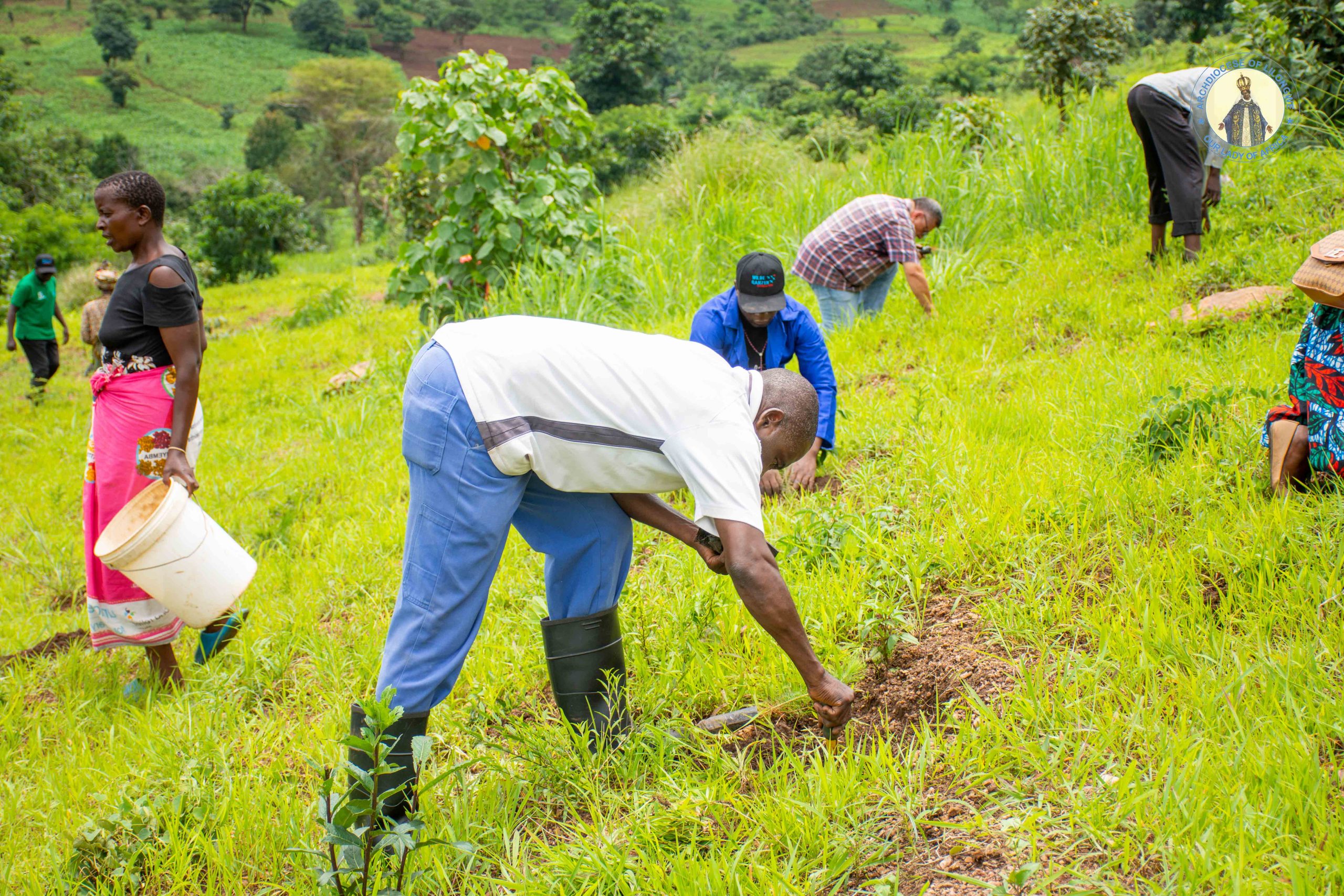
In his remarks, Andrew Chawinga, the Assistant Forestry Officer for Dowa District, highlighted the strategic importance of the archdiocese’s involvement in the region. He noted that the Church’s leadership is vital in helping local communities grasp the urgent necessity of reforestation.
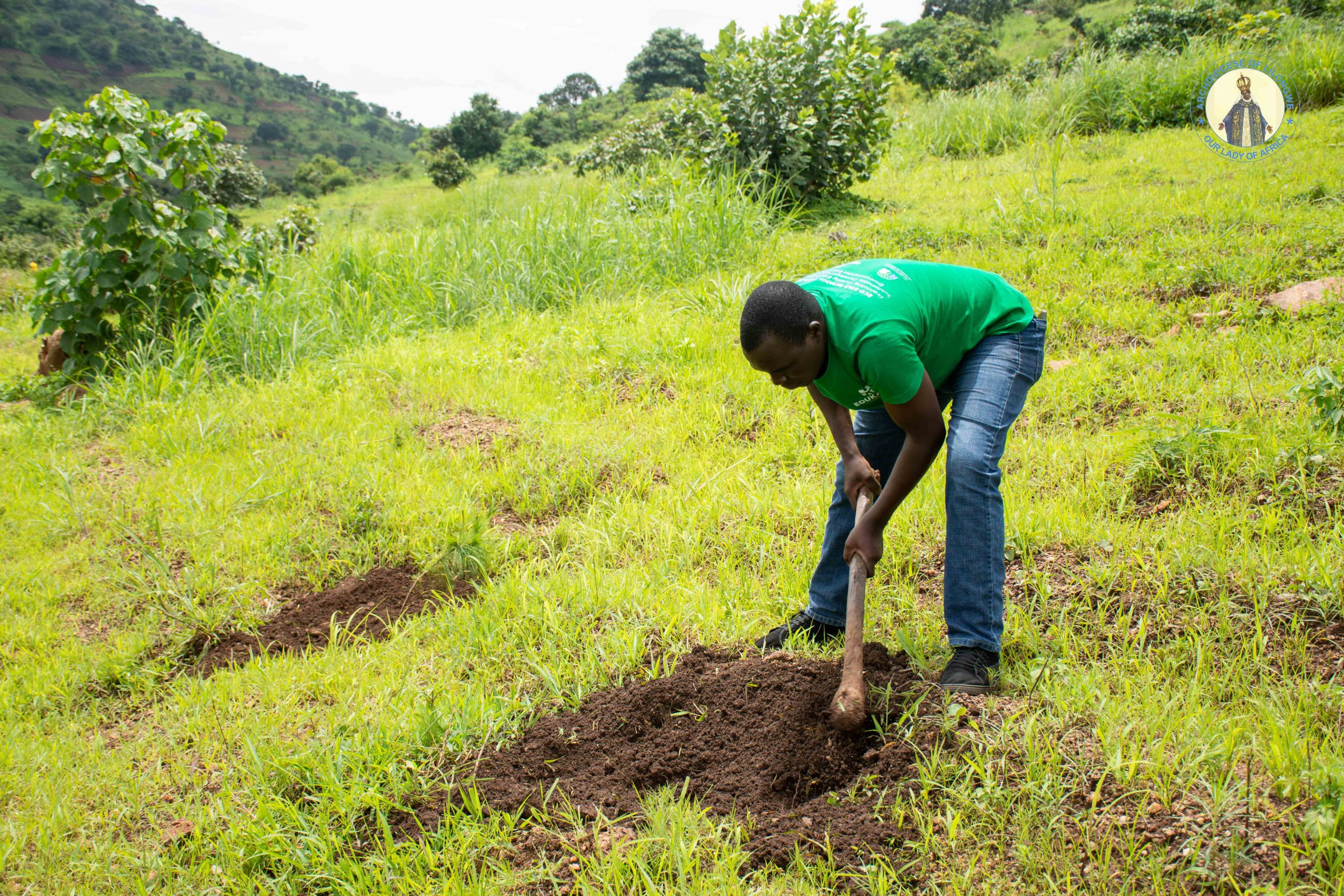
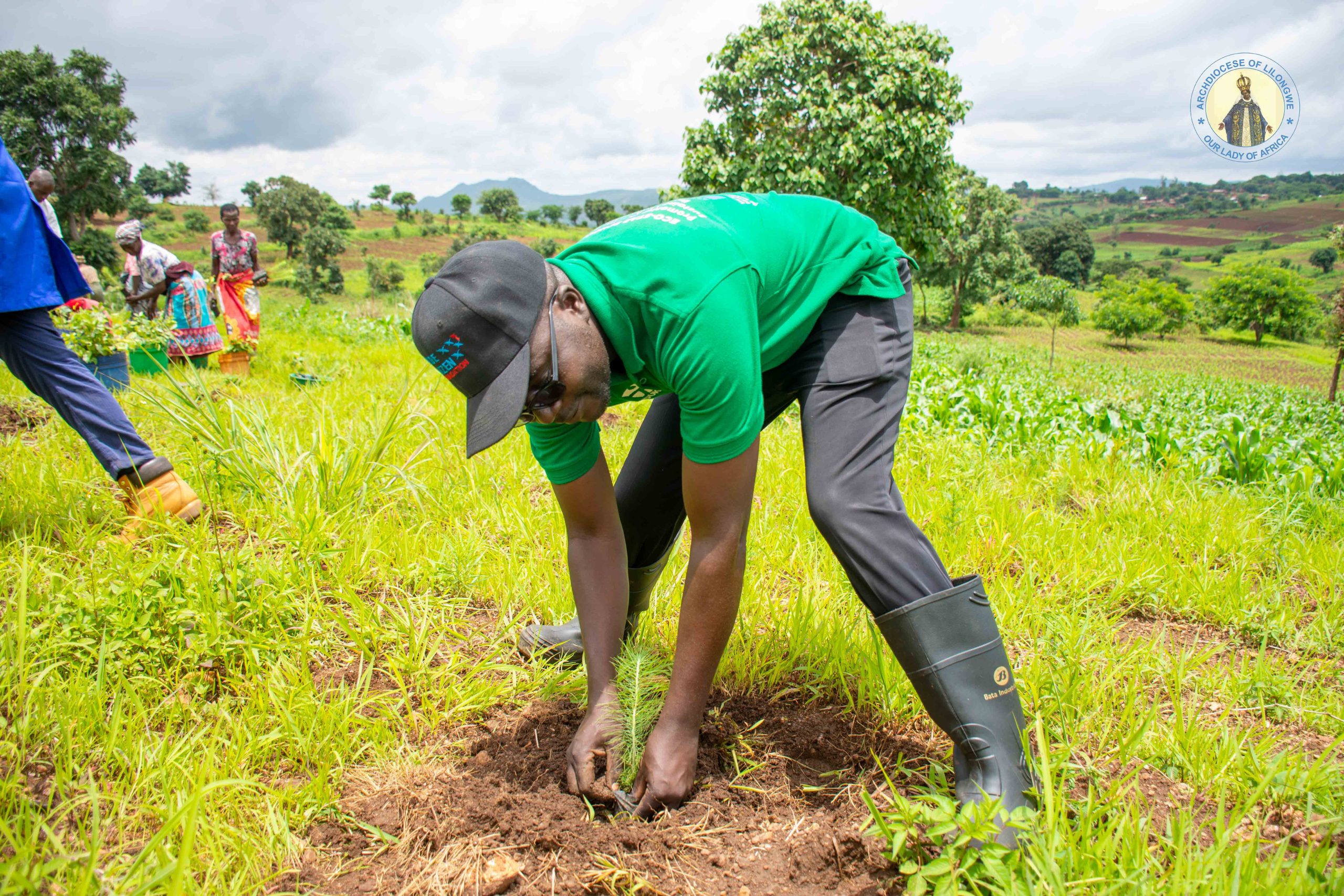
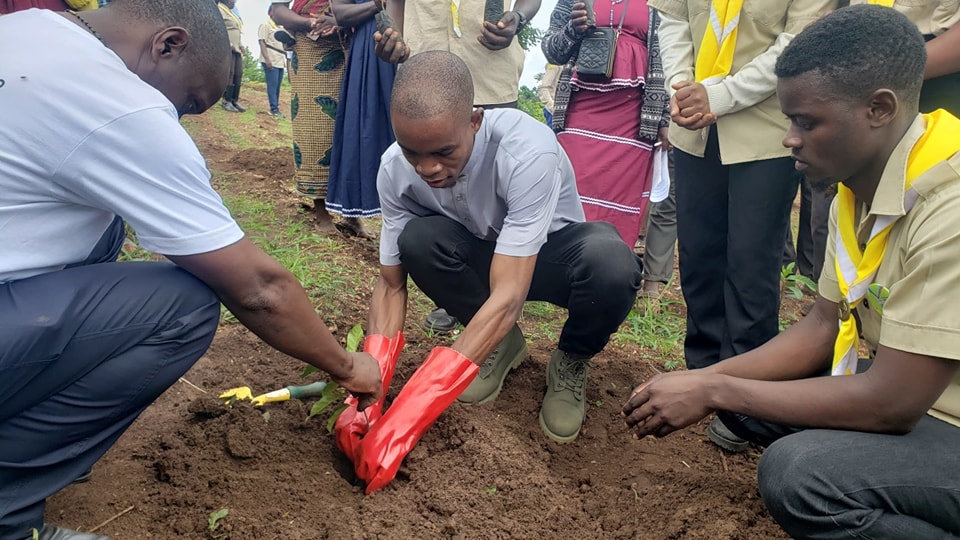
Chawinga demonstrates proper planting techniques to ensure high survival rates for the new saplings
According to Chawinga, the increase in climate-related disasters—including severe floods and cyclones—is directly linked to the scarcity of trees across the country. He maintained that these environmental challenges can be effectively managed and controlled if Malawi remains committed to aggressive tree-planting efforts.
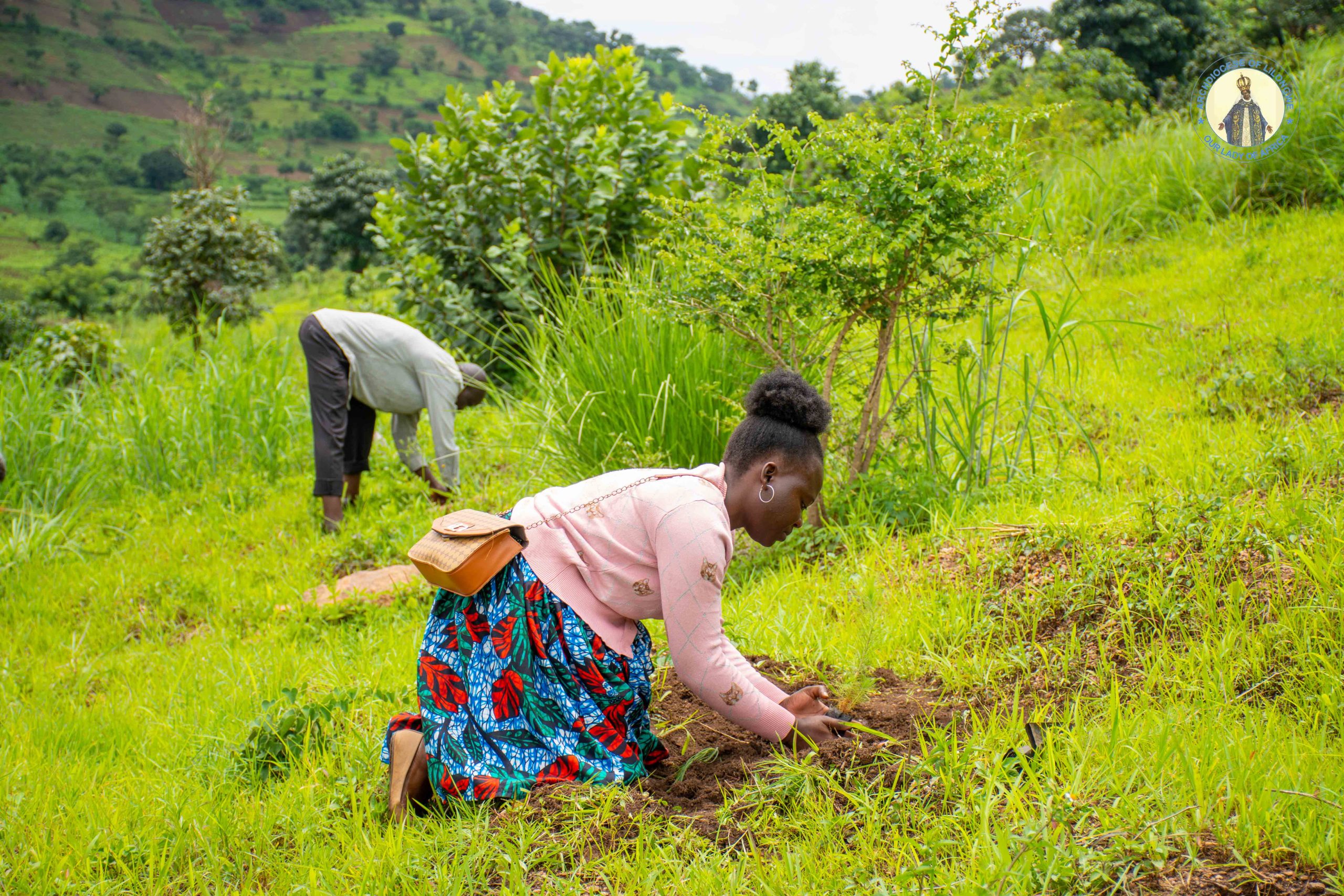
Local residents are taking a proactive role in ensuring the survival of the new saplings. Felesitiya Chunga, a member of the Banja Loyera Small Christian Community, shared that the community has learned from past challenges where survival rates were low.
Preparation: The community began preparing the planting site as early as October 2025.
Protection: Youths will be deployed to patrol the area and protect seedlings from livestock.
Legislation: Parishioners are engaging local chiefs to establish and enforce local bylaws to punish those who destroy the new plantations.
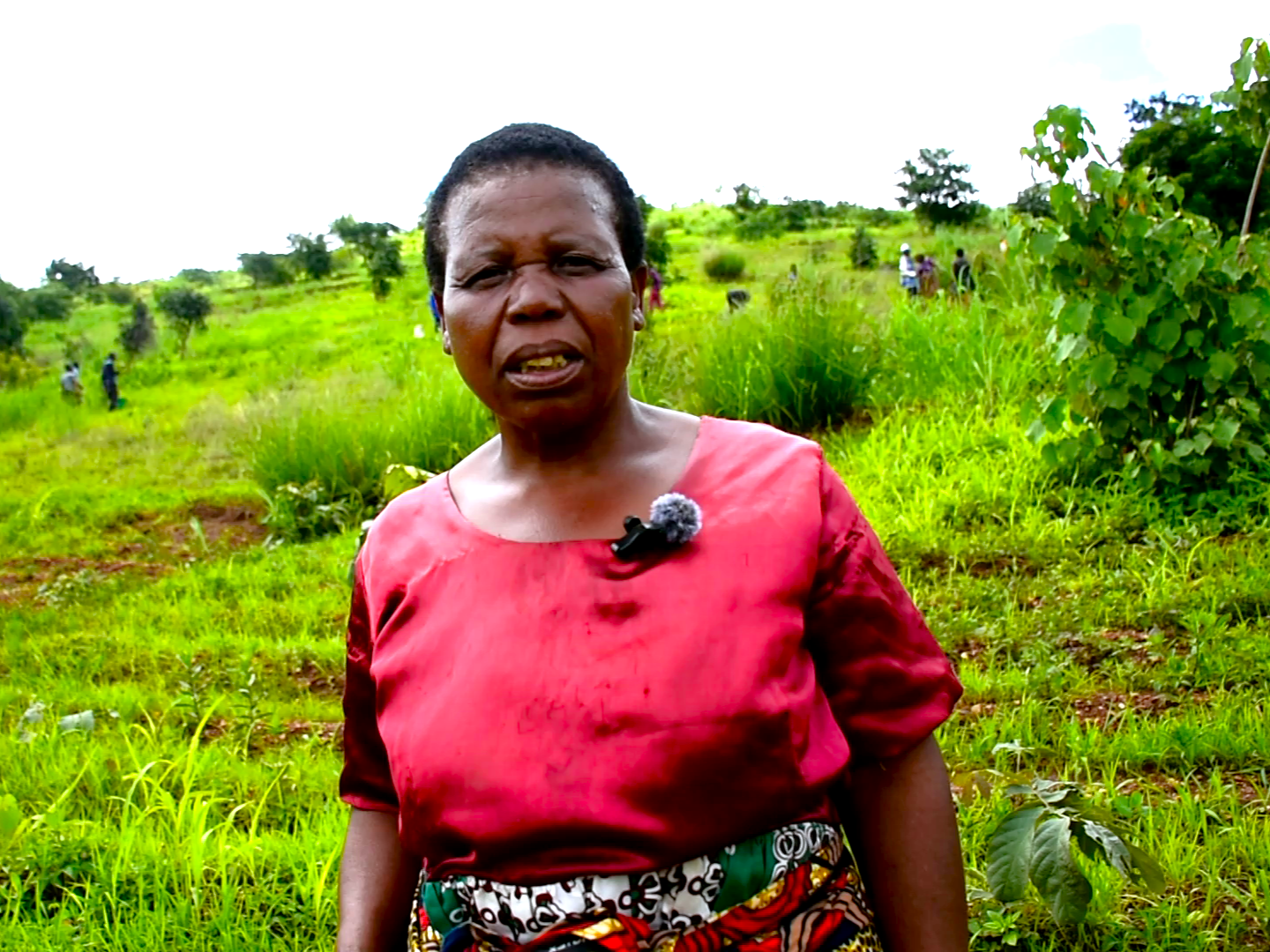
Felesitiya Chunga stands at the planting site
“We are determined that this time, these trees will grow,” Chunga said, calling on all Small Christian Communities to put maximum effort into conserving the area.
Background: A Long-Term Vision for Environmental Restoration
The Archdiocese of Lilongwe’s environmental initiative in Dowa is a sustained effort that gained significant momentum in February 2025.
On February 1, 2025, Bishop Vincent Fredrick Mwakhwawa, the Auxiliary Bishop of Lilongwe, led a planting exercise at the area (Andros Village, T/A Chiwere). Bishop Mwakhwawa established the Church’s stance: working hand-in-hand with the government to restore the environment.
Before the trees were even planted, the Archdiocese’s Education and Environment office—led by Lloyd Chishambula—conducted community training. This ensured that parishioners didn’t just plant trees but understood why they needed to care for them.
The initiative takes place on land specifically owned by the archdiocese, demonstrating a “lead by example” approach to land management.
The project has been driven from the start by local Small Christian Communities (SCCs), including Maria Goreti, Kizito Woyera, and Banja Loyera, all under St. Benedict the Black (Nanthomba) Parish.
In 2025, the Dowa District Forestry Office (then represented by Acting Officer Yohane Mtsitsi) praised the archdiocese for helping the government meet its national restoration goals.