MONSIGNOR THAWALE URGES THE RELIGIOUS TO SELL CHRIST

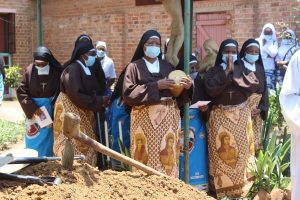
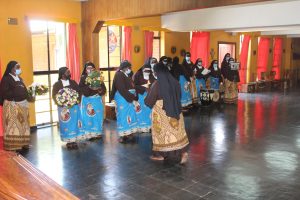
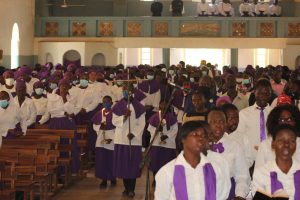
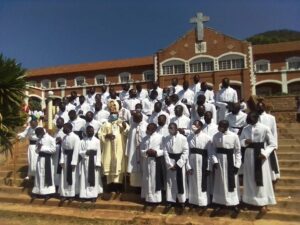
Carmelite Sisters with Monsignor Thawale

Sam Kalimba

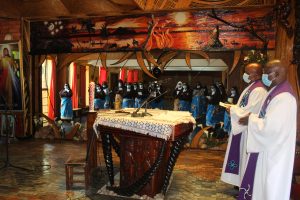
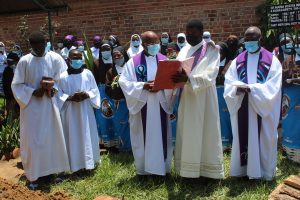
NAMITETE 12th June, 2021: The Archdiocesan Administrator of the Archdiocese of Lilongwe the Very Reverend Fr. Patrick Thawale has urged priests and the Religious to live what he called the rule of life, love. He made his advice in his homily made on the occasion of Mass for the first vows, final vows and Silver Jubilee for some Carmelite Sisters at the St. Peter Namitete Parish on 12th June 2021.

“show to everyone and sell your God given product of being in Christ. This does not imply that you live as an Angel. You are still human but a special one for that matter. Love is key to your life. Be happy Sisters in order to share the same happiness with whosoever comes in contact with you. Radiate the joy of being a follower of Christ,” advised Fr. Thawale.

He further unpacked the meaning of faith as being knowing and believing without necessarily expecting a receiving. He said that faith comes with spiritual wisdom and knowledge. He told the people of God to cultivate the values of self-reliance and self-discipline if at all they are to move with their mission and faith.

Fr. Thawale did not miss words in mentioning the fact that to work for Christ will always have some challenges that only those with strong faith will survive.

“You meet challenges, I urge you to face all trials and challenges head on for they will keep you stronger. Sorrows keep you human enough. Accept failure for it will keep you humble. Humility is key to success. Success keeps you glowing. However, let your success be beneficial to others. When others benefit from your success it pleases God. Only God keeps you going. When working for God don’t forget Him who sent you in His vineyard,” counselled Fr. Thawale.

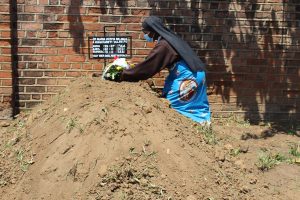
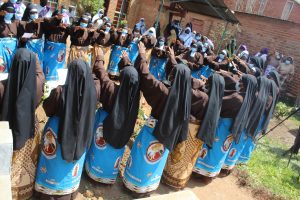
Novice Malania Kavina made her first professions to chastity, obedience and poverty for one year while Sisters Florence Sitima and Esther Banda made the same vows for life. Sister Bernadette Malomo was during the same Mass celebrating her 25 years as a Carmelite nun.

MARTYRS OF UGANDA PILGRIMAGE AT HOME

Sam Kalimba

5 June, 2021 Lilongwe: A group of Malawian Catholics who for the past 11 years have been gathering to pray with the intercession of the Martyrs of Uganda through a pilgrimage to Namugongo in Uganda, this year have prayed at home.

Isaac Mphweya is the publicity secretary of the grouping and said that every 3rd June is a day to commemorate the martyrdom of the 23 Anglican and 22 Catholic converts to Christianity in 1885 to 1887 in Uganda.  He said that according to history, they were martyred by King Mwanga the second.

“Due to the Covid19 pandemic we have not been able for the past two years to go on a pilgrimage to Uganda. This year we are commemorating the martyrdom of our African Saints in different parishes within our chapters.  Others have gathered in Mzuzu, others are in Zomba, Others are in Blantyre while we are here in Lilongwe. We have chosen Catholic Parishes whose patron saints are either Martyrs of Uganda or one of them,” said Mphweya.

He said that the team that met at Kaggwa Woyera Parish of the Archdiocese of Lilongwe had a retreat facilitated by Fr. James Mkwezalamba who also celebrated mass for them.

While reflecting on the lives of the African Martyrs, Fr. Mkwezalamba also reflected on the dilemma of Peter and Paul on who is to be served. He said that while Peter emphasized on the fact that salvation was for the Jews or those gentiles who were willing to follow the Jewish customs and traditions Paul stood for the position that salvation was for all.

“It took the Holy Spirit to appear to Peter in the vision he saw a lot of animals with the words that say ‘You have no right to call what God created profane’. This only tells us that Peter was cleared of his dilemma and that no food could determine who should be saved,” narrated Fr. Mkwezalamaba.

He went further to ask the Namugongo pilgrims that in their prayer life and daily life they should not segregate others and take themselves as holier than the others who are not part of them.

The Malawi Friends of Namugongo according to Mphweya was founded some 11 years ago and allows all Christians regardless of faith and denomination to join.

THE ARCHDIOCESE OF LILONGWE LAUNCHES A NEW PASTORAL CENTRE PROJECT

The Archdiocese of Lilongwe has launched a new project for the construction of the new Pastoral Centre for the use of different groups in the Church. The structures at the new centre will include hostels, conference centre and the chapel, among others.

The Administrator of the Archdiocese, Very Reverend Patrick Thawale, in his launching speech said the centre will be beneficial to all who will pass at the centre. “All who will pass here will come closer and closer to God through their pastoral activities,” he said.

The Pastoral Coordinator of the Archdiocese, Fr. James Mkwezalamba, in his speech said the centre will benefit priests and the lay faithful in their ongoing formation. “When everything is completed here, all priests and the lay faithful will benefit a lot from this centre in the works of ongoing formation.”

Mr. MacDonald Lupenga is the Archtect and will construct the buildings. Mr. Chiudzu is the Quantity Surveyor and Engineer Mwale is one of the professionals at the project.

The first building, which is the hostel at the centre is expected to be completed by August, 2021.

(Reported by Fr. Louis Chikanya)


The foundation of the first building at the centre


Mr. Alfred Ngalande, the Archd. Financial Admin. leading the delegates to the launch of the New Centre at the site’s Administration


Some of the deligates at the launch


Mr. Lupenga, the Archtect explaining the technicalities of the work as Fr. Jean Marie, to his left listens


Mr. Chiudzu, the Quantity Surveyor, right, following the proceedings


Very Rev. Patrick Thawale, delivering his launching speech and to his right is Fr. James Mkwezalamba, the Pastoral Coordinator.


Group Photo at the construction site


Very Rev. Patrick Thawale laying the foundation stone at the new centre


LILONGWE ARCHDIOCESAN CLERGY IN A FOUR DAY SESSION ON RESOURCE MOBILISATION, ST. JOSEPH, ETC

The Archdiocesan Clergy of the Archdiocese of Lilongwe from 1 June to 4th June 2021 had a successful session in Mangochi where, among others they were grilled on resource mobilisation, with Fr. Henry Zulu, management and accountability, with Fr. Gerald Kubetcha Mumba. The clergy also reflected on the life of St. Joseph in this year of St. Joseph, with Fr. Frank Chingale.

The session was conducted at the St. Montfort House in Mangochi. During the session, it was established that many parishes in the Archdiocese collect resources from First fruits (Masika),  Tithe (Mtulo), and Daily/Sunday Collections (Za m’mbale). Some of the resources come in the form of donations, selling of materials and special collections, or Paper Sundays.

The issue dwelt much on how these resources are managed and accounted for. Mostly, it is easier to collect money and other materials from the faithful, the challenge is how to make good and profitable use of them. Good management and accountability is a motivation for the faithful to give more; this fact is neglected, but it counts the more.

The men in collar were also assisted to reflect on the shadow life of St. Joseph, the husband of Mary, the Mother of Jesus. Fr. Frank Chingale, the Vicar General of the Diocese of Mangochi led the session in which he reminded the clergy of the seven characteristics of St. Joseph, worthy emulating;

  1. he was the caring father
  2. he was the loving father
  3. he was the creatively courageous father
  4. he was the father in the shadows
  5. he was the serving father
  6. he was the accepting father and
  7. he was the working father

Finally, the priests were reminded of their canonical rights and obligations. The session was concluded with the Holy Mass led by Fr. Samson Kumkumbira.

Fr. Henry Zulu, Vice Chair of the group facilitating on resource mobilisation


session in progress

Part of the Clergy following the session attentively

Fr. Frank Chingale, facilitating on St. Joseph


Clergy in the session


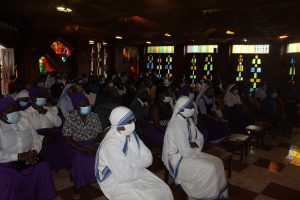
Clergy at Mass

FOURTH SUNDAY OF EASTER – GOOD SHEPHERD SUNDAY

READINGS:

1st Reading:                 Acts 4:8-12

Psalms:                        118:1.8-9.21-23.26.28.29

2nd Reading:                1Jn 3:1-2

Gospel:                        Jn 10:11-18

A GOOD SHEPHERD AMIDST COVID -19

A HOMILY BASED ON THE THEME OF A GOOD SHEPHERD AFTER JESUS CHRIST

Shepherding in ancient Israel

In the ancient Israel, shepherding was not uncommon. Majority of Israelites were pastorists. They tended the sheep in the fields. Many were hired shepherds to watch over and look after the flock. Therefore, the primary responsibility of every shepherd was to make sure of the safety and welfare of the flock. A shepherd was expected to graze the animals to areas of good forage and keeping a watchful eye against wolves, thieves and poisonous plants.

Shepherding was a difficult task because shepherds spent most of their time in the field with the flock. Sometimes they could take days on end in the field before they came home.

Another challenging part of shepherding in Israel was that shepherding was not compatible with family life; shepherds, because they stayed for long in the field, and uncertain steady income, they could not commit themselves to marriage. They therefore remained single, without wife or children.

Shepherds also were likely to be susceptible to danger of meeting treacherous wild animals who could threaten the life of the flock and even their own life.

Despite the dangers, shepherds were expected to defend the flock.

Qualities of a good shepherd 

A good shepherd was supposed to be a good guide of the sheep. A good guide brought the flock to good pasture to graze. He would bring the flock to safety areas to rest.

A good shepherd exercised patience because some members were difficult to tend; they could run away from the flock.

A good shepherd loves his sheep more to the extent of losing his life by defending the sheep against enemies that would devour the flock.

A shepherd after Jesus Christ

Jesus Christ says in the gospel of John 10:11-18 that he is a good shepherd. He lays down his life for his sheep. He is not like the hired shepherds who run away when faced with danger. He is a good shepherd because he knows his sheep and his own know him.

Knowledge of the sheep is key to good shepherding. Knowledge of the people a pastor is ministering to, is key of good shepherding. Modern pastors face this challenge of ministering to people they do not know. Sheep may hide from the eye a shepherd. A shepherd may be lazy to make an effort to get to know his own sheep.

In the Old Testament, a shepherd is related to a leader of the community. A good leader takes care of his people, watch over them for their safety. A good leader provides or creates good environment for his people to make progress. A good leader takes the welfare of the people first before his own. If we look around and see our leaders, we find out that qualities of good leadership are lacking. Let us take our civil leaders; most of them take advantage of poor administrations to harvest from public funds living the communities poorer and poorer. Poor structures in our communities is a result of poor leadership that we have.

The need for more vocations

The fourth Sunday of Easter is also The Good Shepherd Sunday. On this Sunday, the Church invites all to pray for vocations that will foster service in the Church and in the world. The world today more than ever, needs good willed people to serve selflessly, shepherds who can die for their sheep.

The Church today, more than ever, needs priests, sisters, brothers and couples who are more concerned not with their own good but the good of the people. Perhaps, other than praying for more people into priesthood or sisterhood or married life, we should pray for those already in the service to be good ministers after the heart of Jesus Christ. The people of God are crying for good ministers who are patient and selfless.

May Jesus Christ guide all pastors as they watch over the flock entrusted to them.

[Fr. Louis Chikanya]